
347 Stainless Steel is a Niobium (Nb)-stabilized austenitic stainless steel developed as an optimized version of 304 stainless steel. The addition of niobium effectively prevents the precipitation of chromium carbides at grain boundaries, significantly enhancing resistance to intergranular corrosion, making it particularly suitable for use under high-temperature and welding conditions. It is widely used in industries such as power generation, petroleum, chemicals, synthetic fibers, food, and papermaking for heat exchangers, superheater tubes, reheater tubes, and steam tubes.
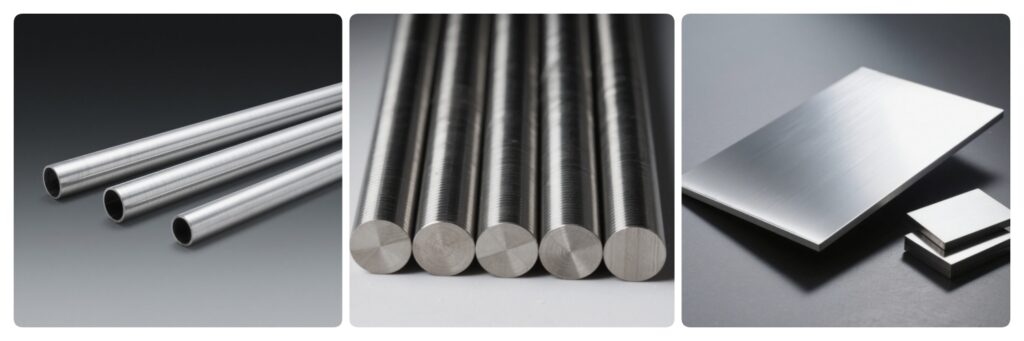
UNS S34700 Chemical Composition
347 The composition of stainless steel is the core foundation of its performance. It not only contains the common chromium and nickel elements found in stainless steel—chromium provides the material with basic corrosion resistance, while nickel ensures the stability of the austenitic structure—but more importantly, it includes niobium (Nb) as a key alloying element. The addition of niobium acts like a “protective shield” for the material, effectively preventing intergranular corrosion during welding. During welding, ordinary stainless steel may form carbides due to the combination of carbon and chromium, leading to a reduction in chromium content at grain boundaries and thereby weakening corrosion resistance. However, the niobium in 347 stainless steel prioritizes binding with carbon, preventing chromium loss and ensuring that the material retains excellent resistance to intergranular corrosion after welding.
| Carbon | Chromium | Nickel | Manganese | Silicon | Phosphorus | Sulfur | Niobium |
| 0.08 | 17.0-19.0 | 9.0-13.0 | 2.0 | 0.75 | 0.045 | 0.03 | 10 x C min / 1.00 max |
347 stainless steel Mechanical Properties
| MATERIAL | T.S (MPA) | Y.S (MPA) | EL % |
| 347 | 515 min | 205 min | 35 min |
Common Standards
ASTM A240 – 347 stainless steel plate, sheet, and strip
ASTM A312 – 347 seamless and welded pipes
ASTM A182 – 347 forged flanges and fittings
ASTM A276 – 347 stainless steel bars
ASTM A403 – 347 stainless steel butt-weld pipe fittings
Characteristics
347 stainless steel (UNS S34700, also known as 1.4550) is a chromium-nickel austenitic stainless steel with a composition similar to that of common 304 stainless steel, but with the key difference being the addition of two stabilizing elements: niobium (Nb) and tantalum (Ta).
Outstanding resistance to intergranular corrosion: This is the most notable feature of 347 stainless steel. Within the temperature range of 425°C to 870°C, ordinary stainless steel is prone to intergranular corrosion due to the precipitation of chromium carbides at grain boundaries. However, the niobium and tantalum in 347 stainless steel preferentially react with carbon to form stable niobium carbides, thereby preventing the consumption of chromium and significantly enhancing resistance to intergranular corrosion.
Excellent high-temperature performance: It exhibits outstanding creep strength and sustained strength, with oxidation resistance up to 870°C, making it suitable for long-term high-temperature use.
Good weldability: The addition of stabilizing elements allows it to maintain corrosion resistance without post-weld heat treatment, simplifying the manufacturing process.
Non-magnetic: It is non-magnetic in the annealed state.
High-temperature resistance
347 stainless steel exhibits exceptional high-temperature resistance. While many metals soften or oxidize at high temperatures, 347 stainless steel maintains its structural integrity with minimal loss of strength. Its excellent oxidation resistance also means it is unlikely to degrade in performance even after prolonged exposure to high temperatures.
As a result, 347 stainless steel has become the material of choice for high-temperature equipment, such as boiler components, high-temperature sections of pressure vessels, and exhaust pipes for automobiles and industrial furnaces. In these demanding application environments, 347 stainless steel can withstand prolonged thermal stress, ensuring the safety and reliability of the equipment.
Corrosion Resistance
347 alloy stainless steel plate offers corrosion resistance comparable to that of SUS304. This material was specifically developed for the chromium carbide precipitation temperature range (800–1500°F (427–816°C)), whereas non-stabilized alloys like SUS304 are prone to intergranular corrosion. Within this temperature range, the overall corrosion resistance of 347 alloy stainless steel plate is superior to that of 321 alloy stainless steel plate. In strongly oxidizing environments up to 1500°F (816°C), the performance of 347 stainless steel is also slightly superior to that of 321 alloy.
This alloy can be used in nitric acid solutions and most diluted organic acids (at moderate temperatures), pure phosphoric acid (at low temperatures), and diluted solutions with concentrations up to 10% (at high temperatures). 347 stainless steel plates can resist stress corrosion cracking caused by polysulfuric acids in hydrocarbon media. It can also be used in alkaline solutions without chlorides or fluorides at moderate temperatures.
Finishes
Acid washing and passivation
First, the surface is acid washed to remove oxide scale and impurities. Then, passivation treatment is performed to form a dense oxide film, significantly improving corrosion resistance and preventing rust.
Mechanical polishing
Tools such as sandpaper or polishing wheels are used to grind and polish the surface to achieve a smooth and flat finish. This not only improves the appearance but also enhances its resistance to contamination.
Sandblasting
This process uses abrasive particles to blast the surface, creating a fine matte texture. It increases surface roughness, which is highly beneficial for improving coating adhesion and decorative effects.
Electrolytic Polishing
An electrochemical method used to eliminate microscopic surface irregularities. It produces a mirror-like finish, enhancing corrosion resistance and aesthetic appeal.
Coating
Applying a protective coating to the surface, such as fluorocarbon paint or polytetrafluoroethylene (PTFE). This adds an extra layer of protection, further improving corrosion resistance and wear resistance.
Hot Working
Hot working of 347H stainless steel, such as forging and upsetting, should be performed within the temperature range of 1149°C to 1232°C (2100°F to 2250°F). Within this temperature range, the material exhibits optimal plasticity, allowing for easy shaping while avoiding issues such as cracking due to low temperatures or excessive grain growth due to high temperatures.
Cold Working
347H stainless steel exhibits excellent cold working properties, primarily due to its superior toughness and ductility. It can be easily subjected to various cold forming operations, such as:
Stamping: Suitable for mass-producing complex thin-sheet parts.
Blanking: Used to cut specific shapes from large sheets of material.
Spinning: Suitable for producing symmetrical hollow components, such as pipes or containers.
Drawing: Suitable for manufacturing deep cup-shaped or cylindrical parts.
Advantages of Choosing 347 Stainless Steel
Reliable for long-term high-temperature service
Maintains corrosion resistance after welding
Works well in oxidizing and some reducing environments
Long service life with lower maintenance costs
Applications
Aerospace: Aircraft exhaust manifolds, piping, and engine components.
Petrochemical: Petroleum refining equipment, high-temperature piping, and vessels.
Power and Energy: High-temperature steam pipelines and boiler components.
Food Processing and Pharmaceutical: Equipment requiring welding where post-weld annealing is not feasible.
Heat Treatment Equipment: High-temperature furnace components.
Comparison: 347 vs. 304 vs. 321 Stainless Steel
| Material | High-Temp Performance | Intergranular Corrosion Resistance | Cost | Applications |
| 304 | Medium | Moderate | Low | General corrosion-resistant equipment |
| 321 | Good (Ti-stabilized) | Strong | Medium | Aerospace, chemical industry |
| 347 | Excellent (Nb-stabilized) | Very strong | Slightly higher | High-temp chemical, boiler, aerospace |
Conclusion
347 stainless steel is a high-performance material combining excellent high-temperature strength with intergranular corrosion resistance, making it an ideal choice for petrochemical, aerospace, and boiler applications. Whether for corrosion resistance or high-temperature performance, 347 stainless steel provides stable and reliable service in demanding conditions.
ZIZI specialize in selling all kinds of stainless steel pipe fittings, tubes, plates, flanges, bolts and nuts, our products are widely used in many fields, from precision machinery manufacturing to warm home decoration and even high-end aerospace industry. We have become a trusted choice for many industries due to our superior product quality and wide range of applications. Not only do we offer a wide range of products, but we can also provide customized processing services according to the specific needs of our customers, ensuring that your expectations are accurately met every time we work together. With advanced production equipment and strict quality management system, we are committed to providing high-quality piping solutions to customers worldwide. Welcome to contact us.