
What is ASME B16.5 Flange Sealing Face?
Sealing face is critical contact surface of ASME B16.5 flange that mates with gaskets to create a leak-tight seal. The surface’s design, dimensions, and finish directly determine the sealing reliability of piping connections. ASME B16.5 strictly regulates sealing face geometry, surface finish, and tolerances. It ensures universal compatibility across flanges, gaskets, and fasteners from different manufacturers.
Among the various sealing face designs, Raised Face (RF), Flat Face (FF), and Ring Type Joint (RTJ) are the most widely used in industrial applications. All are engineered to meet specific pressure, temperature, and media requirements while adhering to strict ASME B16.5 compliance criteria.
ASME B16.5 Sealing Face Types: RF, FF & RTJ
ASME B16.5 categorizes RF, FF, and RTJ as primary designs for industrial flanged connections, each with distinct structural characteristics tailored to different operating conditions. All three types must comply with the standard’s dimensional and material specifications. But their unique geometries make them suitable for varying pressure ranges and application scenarios.
The Raised Face (RF) features a surface raised above the flange’s bolt circle plane. The Flat Face (FF) is flush with the bolt circle plane for low-pressure use. And the Ring Type Joint (RTJ) incorporates a circular groove to mate with a metal ring gasket for high-pressure/high-temperature service. Together, these three designs cover the majority of industrial piping needs, from low-pressure water and gas lines to high-pressure refinery and power plant systems, with ASME B16.5 ensuring consistent manufacturing and interchangeability for each type.
Specification for RF (Raised Face)
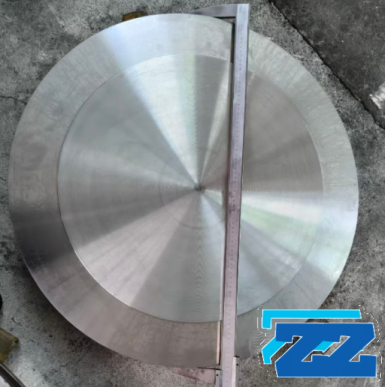
ASME B16.5 outlines precise technical specifications for Raised Face (RF) sealing faces. And RF sealing face is the most versatile and commonly used design across Class 150 to 2500 flanges. The standard mandates two primary raised face heights: 1.6 mm (1/16″) for Class 150 and 300 flanges, and 6.4 mm (1/4″) for Class 400, 600, 900, 1500, and 2500 flanges. The raised face’s diameter (sealing surface) is strictly defined relative to the flange’s nominal pipe size (NPS) and pressure class, with tight dimensional tolerances to ensure proper gasket fit.
For surface finish, ASME B16.5 requires a 125–250 microinch Ra (3–6 μm Ra) serrated finish. It is typically created by concentric or spiral machining with 45–55 grooves per inch. The serrations enhance gasket contact and create a mechanical seal by trapping fluid within the grooves, preventing leakage.
Additionally, the standard specifies that RF faces must be free of scratches, pits, and deformities. And the raised surface must be concentric with the flange bore to ensure uniform gasket compression during bolt tightening.
All RF flanges must be marked with ASME B16.5 compliance, including pressure class, NPS, and material grade, to verify adherence to these specs.
Specification for FF (Flat Face)
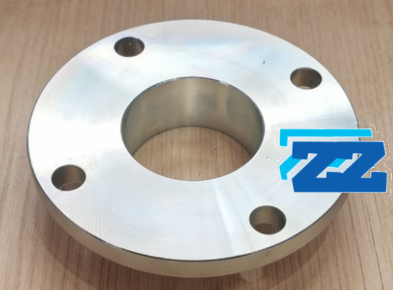
Flat Face (FF) sealing faces are governed by ASME B16.5 specifications tailored exclusively for Class 150 and lower pressure ratings. It’s designed for low-stress, non-critical industrial piping applications. ASME B16.5 mandates that FF surfaces be perfectly flush with the flange’s bolt circle plane, with no raised or recessed areas. This is to ensure full contact with non-metallic full-face gaskets. And it is also the only gasket type approved for FF flanges by the standard.
The surface finish requirement for FF faces is a 250–500 microinch Ra (6–12 μm Ra) smooth finish. This is less aggressive than RF serrations to prevent damage to soft non-metallic gaskets (e.g., rubber, PTFE, non-asbestos) during installation.
ASME B16.5 strictly prohibits pairing FF flanges with RF flanges. Mainly because the mismatched surfaces create uneven gasket compression and almost always result in leakage. The standard also specifies tight flatness tolerances for FF faces (no more than 0.001″ per inch of diameter) to ensure uniform pressure distribution across the gasket, and requires that bolt holes be positioned to avoid interference with the sealing surface.
Like all ASME B16.5 flanges, FF units must include compliance markings and dimensional verification to meet the standard’s quality criteria.
Specification for RTJ (Ring Type Joint)
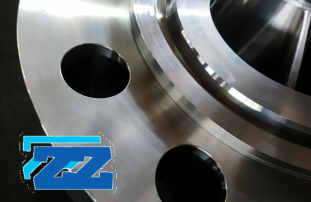
Ring Type Joint (RTJ) sealing faces are designed for Class 600 to 2500 high-pressure/high-temperature (HP/HT) piping systems. And engineered for extreme operating conditions in oil and gas exploration, refineries, and power generation.
ASME B16.5 defines RTJ faces as a circular groove machined into the flange face, with precise groove dimensions (width, depth, and radius) that vary by pressure class and NPS. The groove is designed to perfectly cradle a metal ring gasket that deforms plastically under bolt pressure to create a metal-to-metal seal.
The standard mandates a ≤ 1.6 μm Ra (63 microinch Ra) mirror-smooth finish on the groove’s sidewalls. Mainly aims to ensure maximum contact with the metal ring and prevent leakage in HP/HT service. ASME B16.5 also specifies that RTJ flanges must be manufactured from high-strength alloy steels to withstand extreme pressure and temperature. And the groove must be concentric with the flange bore to ensure even ring compression.
The standard prohibits modifying RTJ groove dimensions, as any deviation from ASME B16.5 specs will compromise the metal-to-metal seal and lead to catastrophic failure in critical systems. All RTJ flanges must undergo rigorous dimensional inspection and pressure testing to confirm ASME B16.5 compliance.
ASME B16.5 Flange Types & Sealing Faces
| ASME B16.5 Flange Type (Abbreviation) | Common Sealing Faces |
| Weld Neck Flange (WN) | RF (Class 150/300), RTJ (Class 600+) |
| Slip-On Flange (SO) | RF (standard), FF (low-pressure) |
| Blind Flange (BL) | RF, FF, RTJ |
| Socket Weld Flange (SW) | RF (most common), FF (low-pressure) |
| Lap Joint Flange (LJ) | RF (matches lap joint stub end) |
| Threaded Flange (TH) | RF, FF |
Critical ASME B16.5 Compliance Requirements for All Sealing Faces
Beyond type-specific specifications, ASME B16.5 enforces universal compliance requirements for RF, FF, and RTJ sealing faces.
First, dimensional accuracy is non-negotiable. All sealing face geometries (height, diameter, groove size, flatness) must fall within the standard’s tight tolerance ranges with no deviations that could affect gasket fit or seal integrity.
Second, surface quality is mandated for all types. Sealing faces must be free of scratches, dents, pits, rust, and machining burrs, as any surface imperfection can create a leak path for process media.
Third, material compatibility is required. The flange material (and thus the sealing face material) must be approved by ASME B16.5 for the intended pressure, temperature, and media. Together with corrosion-resistant coatings (e.g., galvanizing, passivation) specified for harsh environments in line with the standard.
Fourth, marking and traceability are mandatory. Every ASME B16.5 flange must be permanently marked with the standard designation (ASME B16.5), pressure class, NPS, material grade, manufacturer’s name, and heat number, enabling full traceability and compliance verification.
Finally, performance testing is required for critical applications. ASME B16.5 specifies hydrostatic and pneumatic testing protocols for flanges with sealing faces to confirm leak-tightness at pressures above the rated operating pressure.
Violation of any of these universal requirements results in a loss of ASME B16.5 compliance and renders the flange unfit for industrial use.
How to Ensure ASME B16.5 Sealing Face Compliance in Production
Manufacturing RF, FF, and RTJ sealing faces that meet ASME B16.5 compliance requires a rigorous, standardized production process with strict quality control at every stage.
The process begins with raw material verification. Only ASME B16.5-approved steel grades (e.g., A105, A350 LF2, A182 F304) are used, with material certificates and heat number traceability to confirm compliance.
Next, precision machining is critical. CNC machines with calibrated tooling are used to produce sealing face geometries (RF height, FF flatness, RTJ groove dimensions) to ASME B16.5’s exact tolerances, with real-time dimensional monitoring to avoid deviations. For surface finish, specialized machining tools are used to create the ASME-specified serrations (RF) or smooth finish (FF/RTJ). With surface roughness testers verifying Ra values meet the standard’s requirements.
After machining, 100% dimensional inspection is performed using calibrated gauges, micrometers, and coordinate measuring machines (CMM) to confirm all sealing face specs align with ASME B16.5.
Surface quality inspection follows, with visual and tactile checks to ensure no imperfections, and non-destructive testing (NDT) (e.g., PT, MT) for critical HP/HT RTJ flanges.
Finally, permanent marking is applied in accordance with ASME B16.5. And a compliance certificate is issued for each flange, documenting material, dimensions, finish, and testing results.
Implementing a certified quality management system (e.g., ISO 9001) further ensures consistent ASME B16.5 compliance, with regular audits and tool calibration to maintain production standards.
Application Scenarios
ASME B16.5-compliant RF, FF, and RTJ sealing faces are engineered for specific industrial application scenarios. Their design and compliance specs match the unique demands of different operating conditions.
Flat Face (FF) flanges are ideal for low-pressure, low-temperature non-critical systems (Class 150 and below). Such as municipal water lines, low-pressure air compressors, and general manufacturing process piping with non-corrosive media (water, air, mild chemicals). They are the preferred choice for applications where easy installation and compatibility with soft non-metallic gaskets are prioritized.
Raised Face (RF) flanges are the all-purpose workhorse of industrial piping, suitable for Class 150 to 2500 systems across oil and gas, petrochemical, and power generation. They are used for a wide range of media and operating temperatures. Also they offer a balance of sealing reliability, cost-effectiveness, and ease of installation. All these characteristics make them the most commonly specified ASME B16.5 sealing face type.
Ring Type Joint (RTJ) flanges are exclusively used for high-pressure/high-temperature critical systems (Class 600 to 2500). For example, oil and gas wellheads, refinery fractionation columns, power plant boiler systems, and chemical reactors handling extreme process conditions. That is, high-pressure steam, corrosive hydrocarbons, high-temperature fluids. Their metal-to-metal seal ensures leak-tight performance in scenarios where RF and FF flanges would fail. Strict ASME B16.5 compliance is critical to prevent catastrophic system failure in these high-risk applications.