
ASME B16.5 Slip On Flange is one of the most commonly used pipe flanges in industrial piping systems. It follows the ASME B16.5 standard, and this type of flange is designed to slide over the pipe end and be welded firmly for stable connection. It is widely praised for its simple structure, easy installation, low cost, and good adaptability in various working conditions. This article provides a complete introduction to ASME B16.5 standard, flange types, specifications, sealing faces, usage, applications, and weight chart for engineering and purchasing reference.
ASME B16.5 Standard
ASME B16.5 is one of the most widely recognized and applied international standards for pipe flanges and flanged fittings. It specifies dimensions, tolerances, pressure-temperature ratings, materials, marking, and testing requirements for flanges used in piping systems. This standard is accepted globally in industries such as oil and gas, petrochemical, chemical processing, power generation, water treatment, and general industrial applications. It ensures interchangeability, safety, and performance for flanged connections under different pressure and temperature conditions.
Flange Types in ASME B16.5 Standard
The ASME B16.5 standard covers a complete range of flange types to meet different structural and functional needs. Common types include:
- Weld Neck Flange
- Slip-On Flange
- Socket Weld Flange
- Blind Flange
- Lap Joint Flange
- Threaded Flange
Each flange design is suitable for specific working conditions, pressure levels, and installation methods. Among all these types, the Slip-On Flange remains one of the most popular choices due to its simple structure and convenient installation.
ASME B16.5 Slip On Flange
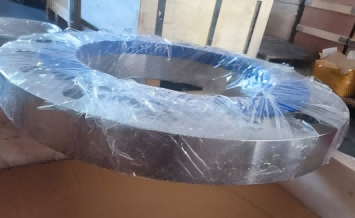
ASME B16.5 Slip On Flange is a lightweight and economical flange style designed to slide over the outer diameter of the pipe. It is then welded on both the inside and outside to ensure strength and tightness. Compared with Weld Neck Flanges, Slip-On Flanges are easier to align and install, which helps save labor time and cost. They are widely used in low-pressure and medium-pressure piping systems where high structural strength is not the primary requirement.
Specifications of ASME B16.5 Slip On Flange
ASME B16.5 Slip On Flanges follow strict specifications to ensure stable performance and interchangeability.
Key specifications include:
| Standard | ASME B16.5 |
| Size Range | NPS 1/2” up to NPS 24” |
| Pressure Class | Class 150, 300, 400, 600, 900, 1500, and 2500 |
| Common Materials | Carbon steel, stainless steel, alloy steel, and other alloy materials according to project requirements |
| Connection Type | Slip over pipe and fixed with fillet welds |
Sealing Faces of Slip On Flange
The sealing face is one of the most important parts of a Slip On Flange, as it directly affects sealing performance and leakage prevention. Under ASME B16.5, Slip On Flanges are available with three main sealing face types:
Raised Face (RF)
Raised Face is the most commonly used sealing face for Slip On Flanges. It features a small raised surface that concentrates pressure on the gasket, improving sealing efficiency. It is compatible with many types of gaskets and suitable for most general industrial applications.
Flat Face (FF)
Flat Face has a full flat sealing surface without any raised section. It is mainly used in low-pressure systems and often matched with cast iron valves or equipment to prevent cracking or damage during assembly.
Ring Type Joint (RTJ)
Ring Type Joint provides metal-to-metal sealing and is used in high-pressure and high-temperature environments. It is typically applied in heavy industries such as oil refineries, offshore drilling, and high-temperature power systems.
To know more about flange sealing faces, please click.
How to Use Slip On Flange
Correct installation ensures the performance and service life of ASME B16.5 Slip On Flanges.
- Slide the Slip On Flange over the end of the pipe until it reaches the proper position.
- Adjust the flange to ensure good alignment with the matching flange or valve.
- Perform inner fillet welding to fix the flange and prevent media leakage.
- Apply outer fillet welding to improve structural strength.
- Place a suitable gasket between the two sealing faces.
- Tighten the bolts and nuts evenly to complete the connection.
Where to Apply Slip On Flange
ASME B16.5 Slip On Flanges are widely used in many industries due to their cost-effectiveness and ease of installation.
Typical applications include:
- Oil and gas gathering and transportation pipelines
- Chemical processing and refining plants
- Water supply and wastewater treatment systems
- Power generation facilities
- HVAC and general industrial piping
- Low and medium pressure utility lines
They perform reliably in non-critical and moderately critical piping systems.
Carbon Steel Slip On Flange Weight Reference
Weight is an important factor for transportation, structural design, logistics, and cost estimation. Below is a reference weight chart for carbon steel ASME B16.5 Slip On Flanges:
| NPS | 150LB | 300LB | 400LB | 600LB | 900LB | 1500LB | 2500LB |
| 1/2 | 0.45 | 0.68 | 0.91 | 0.91 | 2.72 | 2.72 | 3.18 |
| 3/4 | 0.68 | 1.14 | 1.36 | 1.36 | 2.72 | 2.72 | 4.09 |
| 1 | 0.91 | 1.36 | 1.59 | 1.59 | 3.41 | 3.41 | 5.45 |
| 1 1/4 | 1.14 | 2.04 | 2.04 | 2.04 | 4.54 | 4.54 | 8.17 |
| 1 1/2 | 1.36 | 2.95 | 2.95 | 2.95 | 6.36 | 6.36 | 11.35 |
| 2 | 2.18 | 3.18 | 3.63 | 3.63 | 9.99 | 9.99 | 17.25 |
| 2 1/2 | 3.45 | 4.54 | 5.45 | 5.45 | 14.07 | 16.34 | 24.97 |
| 3 | 4.01 | 5.9 | 6.81 | 6.81 | 16.34 | 21.79 | 37.68 |
| 3 1/2 | 4.99 | 7.2 | 9.53 | 9.53 | / | / | / |
| 4 | 5.63 | 10.67 | 10.9 | 14.98 | 24.06 | 33.14 | 57.66 |
| 5 | 6.74 | 13.17 | 14.07 | 28.6 | 37.68 | 59.93 | 95.34 |
| 6 | 7.9 | 16.34 | 17.71 | 36.32 | 49.03 | 74.46 | 146.64 |
| 8 | 12.9 | 25.42 | 28.6 | 44.04 | 78.09 | 117.13 | 220.19 |
| 10 | 17.6 | 34.96 | 41.31 | 80.36 | 111.23 | 197.94 | 419.95 |
| 12 | 27.69 | 51.3 | 58.57 | 97.61 | 148 | 302.82 | 590.2 |
| 14 | 37.68 | 72.19 | 86.71 | 117.59 | 172.52 | / | / |
| 16 | 48.12 | 95.34 | 114.86 | 166.16 | 208.39 | / | / |
| 18 | 49.49 | 114.86 | 140.74 | 216.1 | 293.74 | / | / |
| 20 | 67.19 | 139.38 | 171.61 | 277.85 | 359.57 | / | / |
| 24 | 92.62 | 222.46 | 244.71 | 397.7 | 671.92 | / | / |
Conclusion
ASME B16.5 Slip On Flange is a practical, economical, and widely used flange type in industrial piping systems. Understanding its standard specifications, sealing face types, installation method, and application scope helps users make the right selection. The weight chart provides valuable data for project planning, logistics, and structural evaluation. For most low and medium pressure applications, Slip On Flanges remain a top choice for engineers and purchasers worldwide.