
ASME B16.5 Standard
ASME B16.5 is the most widely used international standard for pipe flanges and flanged fittings. It covers nominal pipe sizes from NPS 1/2 to NPS 24, pressure classes including Class 150, 300, 600, 900, 1500, and 2500, as well as dimensions, materials, marking, pressure-temperature ratings, and testing requirements.
What is ASME B16.5 Socket Weld Flange
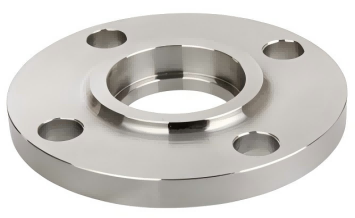
A socket weld flange (SW flange) is a type of forged flange with a recessed socket end. The pipe is inserted into this socket, and a fillet weld is applied around the outside of the flange hub.
Socket weld flanges are designed for small-diameter, high-pressure lines where strong, leak-resistant connections are required. They provide good alignment and reduce welding difficulty compared with other flange types.
ASME B16.5 Class 150 Socket Weld Flange Dimensions
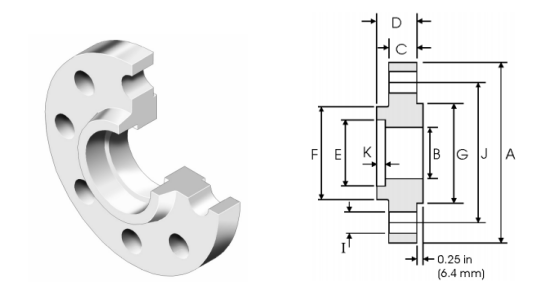
| Pipe | Flange Data | Hub | Raised Face | Drilling Data | ||||||||
| Nominal Pipe Size | OD | A | B | C | D | E | K | F | G | H | I | J |
| mm | Overall Diameter | Inside Diameter | Flange Thickness min | Overall Length | Socket Diameter | Depth of Socket | Hub Diameter | Face Diameter | Number of Holes | Bolt Hole Diameter | Diameter of Circle of Holes | |
| 1/2 | 21.3 | 88.9 | 15.7 | 11.2 | 15.7 | 22.4 | 9.6 | 30.2 | 35.1 | 4 | 15.7 | 60.45 |
| 3/4 | 26.7 | 98.6 | 20.8 | 12.7 | 15.7 | 27.7 | 11.1 | 38.1 | 42.9 | 4 | 15.7 | 69.85 |
| 1 | 33.4 | 108 | 26.7 | 14.2 | 17.5 | 34.5 | 12.7 | 49.3 | 50.8 | 4 | 15.7 | 79.25 |
| 1 1/4 | 42.2 | 117.3 | 35.1 | 15.7 | 20.6 | 43.2 | 14.2 | 58.7 | 63.5 | 4 | 15.7 | 88.9 |
| 1 1/2 | 48.3 | 127 | 40.9 | 17.5 | 22.3 | 49.5 | 15.7 | 65 | 73.15 | 4 | 15.7 | 98.6 |
| 2 | 60.3 | 152.4 | 52.6 | 19.1 | 25.4 | 62 | 17.5 | 77.7 | 91.9 | 4 | 19.1 | 120.7 |
| 2 1/2 | 73 | 177.8 | 62.7 | 22.4 | 28.4 | 74.7 | 19 | 90.4 | 104.6 | 4 | 19.1 | 139.7 |
| 3 | 88.9 | 190.5 | 78 | 23.9 | 30.2 | 90.7 | 20.6 | 108 | 127 | 4 | 19.1 | 152.4 |
Sealing Face Types of SW Flange
ASME B16.5 socket weld flanges use several standard sealing faces:
- Raised Face (RF)Most common type. A small raised surface provides gasket seating. Used in general industrial service.
- Flat Face (FF)Full flat face, used with flat gaskets, mostly for low-pressure applications.
- Ring Type Joint (RTJ)For high-pressure and high-temperature conditions, using metallic gaskets.
RF is the standard for Class 150 socket weld flanges.
Material Selection & Grades
Ø Carbon Steel
ASTM A105 – Standard material for Class 150 flanges
ASTM A350 LF2 – For low-temperature service
Ø Stainless Steel
ASTM A182 F304 / F304L
ASTM A182 F316 / F316L
Ø Alloy Steel (Chrome-Moly)
ASTM A182 F11
ASTM A182 F22
Ø Duplex Stainless Steel
ASTM A182 F51 (2205)
Materials are selected based on design pressure, temperature, medium, and application environment.
Marking Requirements
Flanges must be permanently marked according to ASME B16.5:
- Manufacturer’s trademark (Optional)
- Flange Name
- Nominal size
- Pressure class
- Hub Thickness (for weld neck flange)
- Sealing Face
- Material
- Standard
- Heat number (mandatory for cast steel flanges)
Clear marking ensures traceability and correct installation.
Applications
Socket weld flanges are recommended for:
- Small-bore piping (NPS 1/2 to NPS 4)
- High-pressure systems
- Clean, non-corrosive or mildly corrosive fluids
- Oil, gas, refining, power, and process piping
- Applications requiring good alignment and easy installation
They are not recommended for highly corrosive services where crevice corrosion may occur.
Installation Steps & Key Notes
Installation Steps
- Clean the pipe end and flange socket.
- Insert the pipe into the socket until it reaches the bottom.
- Pull the pipe back slightly to leave a small expansion gap.
- Perform fillet welding around the hub.
- Finish welding and inspect for defects.
Key Notes
- Maintain proper gap to avoid thermal stress.
- Ensure full penetration of the fillet weld.
- Use correct gaskets and fasteners matching flange rating.
Why Use Socket Weld Flange?
- Strong connection suitable for high pressure
- Good alignment, easy to install
- Smooth inner flow path, low turbulence
- Good fatigue resistance
- Compact design for limited space
- Ideal for small-diameter piping systems
These benefits make socket weld flanges a reliable choice for many industrial systems.
Socket Weld Flange vs Slip On Flange
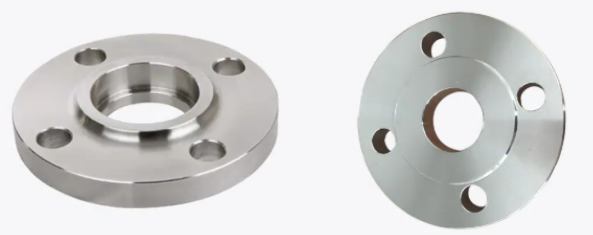
| Item | Socket Weld Flange (SW) | Slip On Flange (SO) |
| Structure | With socket recess | Plain bore, no socket |
| Pipe Connection | Pipe inserts into socket | Pipe slides through flange |
| Welding Type | One outside fillet weld | Two fillet welds (inside + outside) |
| Pipe Size Range | NPS 1/2″ – 4″ | NPS 1/2″ – 24″ |
| Strength & Pressure | Higher strength, better for high pressure | Lower strength, suitable for medium / low pressure |
| Alignment | Self-aligned, easy installation | Needs manual alignment |
| Flow Path | Smooth inner bore | Weld bead may affect flow |
| Fatigue Performance | Better | Normal |
| Cost | Higher | Lower |
| Typical Application | Small-bore, high-pressure lines | General-purpose, large-bore, low-pressure lines |
Conclusion
ASME B16.5 Class 150 socket weld flanges provide a strong, reliable, and compact connection for small-bore piping systems. Understanding dimensions, materials, sealing faces, installation, and differences from slip on flanges helps engineers and buyers make correct selections for safe and efficient operation.