
Hastelloy flanges are flanges made from Hastelloy alloy materials, primarily used in extremely corrosive environments. Hastelloy is a general term for a series of nickel-based alloys renowned for their outstanding corrosion resistance, high-temperature strength, and oxidation resistance. They are widely applied in industries such as chemicals, marine, pharmaceuticals, and aerospace, where extremely high corrosion resistance and high-temperature strength are required.
A flange is a disc-shaped or ring-shaped component used to connect pipes, valves, pumps, and other equipment. It connects two flange faces together using bolts to form a sealed connection. When the fluid medium is highly corrosive, high-temperature, or high-pressure, ordinary carbon steel or stainless steel flanges cannot meet the requirements, so more advanced materials such as Hastelloy are needed.
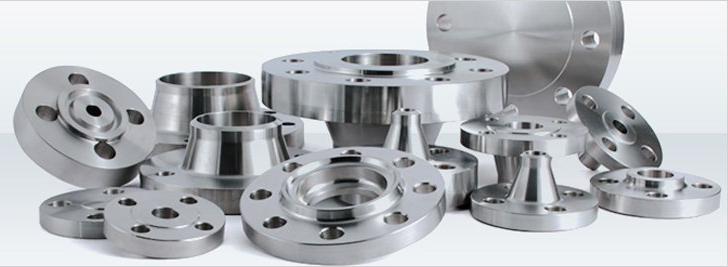
ASTM B564 Hastelloy Flanges Standard Specification
| Specifications | ASTM B564 / ASME SB564 |
| Grades | Hastelloy C276, C22, C4, C2000, B2, B3, X Flanges |
| Standard | ANSI/ASME B16.5, B 16.47 Series A & B, B16.48, BS4504, BS 10, EN-1092, DIN, etc. |
| Size | 1/2″ (15 NB) to 48″ (1200NB) DN10~DN5000 |
| Class / Pressure | 150#, 300#, 600#, 900#, 1500#, 2500# |
| Flange Face Type | Flate Face (FF), Raised Face (RF), Ring Type Joint (RTJ) |
Advantages of Hastelloy Flanges
Exceptional corrosion resistance: Maintains stability even in highly corrosive environments such as sulfuric acid, hydrochloric acid, phosphoric acid, and hydrofluoric acid.
Superior resistance to stress corrosion: Does not easily crack even in high-temperature and high-stress environments.
High-temperature stability: Some Hastelloy alloys can operate continuously at temperatures above 650°C.
Excellent compatibility: Suitable for connecting with various materials such as stainless steel, duplex steel, and nickel alloys.
Hastelloy Flanges Equivalent Grades
| STANDARD | WERKSTOFF NR. | UNS |
| Hastelloy B2 | 2.4617 | N10665 |
| Hastelloy B3 | 2.46 | N10675 |
| Hastelloy C2000 | 2.4675 | N06200 |
| Hastelloy C22 | 2.4602 | N06022 |
| Hastelloy C276 | 2.4819 | N10276 |
| Hastelloy X | 2.4665 | N06002 |
Common Hastelloy Flange Grades
HASTELLOY C276
Hastelloy C276 is an alloy that stands out because of its distinctive blend of elements: nickel, molybdenum, and chromium primarily, with traces of iron, tungsten, cobalt, and other elements. This blend gives the Hastelloy C276 remarkable characteristics, extending these qualities to the flanges crafted from it.
| CHEMICAL | LIMITS | Ni | Fe | Mn | C | Si | S | Cr | Mo | P | W | Co | V |
| Hastelloy C276 | MIN | Balance | 4 | 14.5 | 15 | 3 | |||||||
| MAX | 7 | 1 | 0.01 | 0.08 | 0.03 | 16.5 | 17 | 0.04 | 4.5 | 2.5 | 0.35 |
HASTELLOY C22
Hastelloy C22 corresponds to the American standard material grade ASTM B564 UNS N06022. Hastelloy C22 flanges are forged with excellent corrosion resistance, including excellent oxidation resistance, acid and alkali resistance, corrosion resistance, high temperature performance, and good mechanical properties. They are also resistant to various highly acidic solutions and exhibit excellent corrosion resistance in acidic environments.
| CHEMICAL | LIMITS | Ni | Fe | Mn | C | Si | S | Cr | Mo | P | W | Co | V |
| Hastelloy C22 | MIN | Balance | 2 | 20 | 12.5 | 2.5 | |||||||
| MAX | 6 | 0.5 | 0.02 | 0.08 | 0.02 | 22.5 | 14.5 | 0.02 | 3.5 | 2.5 | 0.35 |
HASTELLOY B2
Hastelloy B-2 is a nickel-molybdenum alloy renowned for its exceptional corrosion resistance in strongly reducing media.It exhibits extremely high resistance to non-oxidizing acids at all concentrations and temperatures. Due to its unique chemical composition, it effectively resists intergranular corrosion in the heat-affected zone of welds.
| Hastelloy B2 | Ni | Mo | Fe | Cr | Co | Mn | P | Si | S | C |
| Nominal% | Remainder | 26-30 | 2.0 Max | 1.0 Max | 1.0 Max | 1.0 Max | 0.04 Max | 0.10 | 0.030 Max | 0.020 Max |
HASTELLOY B3
Hastelloy B3 is a nickel-molybdenum alloy and an upgraded version of Hastelloy B2.It inherits the excellent corrosion resistance of B2 alloy in strongly reducing media and exhibits excellent corrosion resistance to non-oxidizing acids at various concentrations and temperatures. B3 alloy offers higher thermal stability, significantly improving manufacturing reliability and service life. Therefore, B3 alloy is a more reliable choice for applications requiring processing of strongly reducing media and demanding higher processing performance.
| Hastelloy B3 | Ni | Mo | Fe | Cr | Co | Mn | P | Si | S | C | W |
| Nominal % | 65.0 Min | 27.0-32.0 | 1.0-3.0 | 1.0-3.0 | 0.20 Max | 1Max | 0.03 Max | 0.1 Max | 0.01 Max | 0.01 Max | 0.020 Max |
HASTELLOY C2000
Hastelloy C-2000 is a nickel-chromium-molybdenum-copper alloy, distinguished by the intentional addition of copper to the traditional nickel-chromium-molybdenum system. This alloy is designed to serve as a more versatile single alloy capable of resisting corrosion in both reducing and oxidizing media. Its high chromium content provides excellent oxidation resistance, while the combination of molybdenum and copper confers exceptional corrosion resistance when exposed to reducing acids. As a result, Hastelloy C-2000 demonstrates superior performance compared to many similar alloys in complex chemical environments, particularly in applications where both oxidizing and reducing chemicals are present.
| Hastelloy C2000 | Ni | Mo | Cr | Fe | Co | Cu | Mn | AL | Si | C |
| Nominal % | Remainder | 15.0-17.0 | 22.0-24.0 | 3.0 Max | 2.0 Max | 1.6 | 0.5 Max | 0.50 Max | 0.08 Max | 0.01 Max |
HASTELLOY X
Hastelloy X is a nickel-chromium-iron-molybdenum alloy renowned for its exceptional high-temperature strength and outstanding oxidation resistance. It maintains high strength and ductility up to 1200°C (2200°F) and effectively resists oxidation, carburization, and chloride stress corrosion cracking. Due to its excellent combination of properties, Hastelloy X is widely used in aerospace gas turbine engine components, industrial furnaces, heat treatment equipment, and the petrochemical industry.
| Hastelloy X | Ni | Cr | Fe | Mo | Co | w | Mn | Ti | Si | AL | C | Cu | P | S | B |
| Min% | BAL | 20.5 | 17.0 | 8.0 | 0.5 | 0.2 | 0.05 | ||||||||
| Max% | 23.0 | 20.0 | 10.0 | 2.50 | 1.0 | 1.0 | 1.00 | 1.00 | 0.50 | 0.15 | 0.05 | 0.04 | 0.03 | 0.01 |
Common Types of Hastelloy Flanges
| Flange Type | Features / Description |
| Weld Neck Flange | Suitable for high-pressure, high-temperature systems; provides strong and secure connection |
| Slip On Flange | Easy to install; suitable for medium and low pressure applications |
| Blind Flange | Used to close the end of a pipe; ideal for inspection and maintenance |
| Socket Weld Flange | Suitable for small-diameter, high-pressure pipelines |
| Threaded Flange | Ideal for systems where welding is not feasible |
| Lap Joint Flange | Works with stub ends; allows easy alignment and disassembly, suitable for systems requiring frequent maintenance |
You can get an offer for products in below material forms:
-Pipe and Tube (EN 10216-5, ASTM A213, ASTM A249, A312, A790,)
-Forged Fitting and Flange (ASTM A182 , ASTM A105,ASTM B564 )
-Butt Weld Fittings (ASTM A234, ASTM A403,ASTM A815)
-Round bar , Billet (ASTM A276, ASTM A479)
– Plate, Sheet, Strip(ASTM A240, EN 10028-7, A480)
-Bolting, Nuts(ASTM A193, A194, A320)
Typical Applications:
Chemical equipment for processing chlorides.
Equipment for acetic anhydride and acetic acid production.
Pharmaceutical and food industries requiring high purity and corrosion resistance.
Nuclear fuel reprocessing equipment.