
In fastener applications requiring both high strength and superior corrosion resistance, ASTM F593 bolts are the preferred solution. As the standard established by the American Society for Testing and Materials (ASTM) for stainless steel fasteners, the F593 specification ensures these bolts deliver reliable performance in a wide range of demanding environments.
If you are looking for a quality ASTM F593 bolts supplier, feel free to contact us!
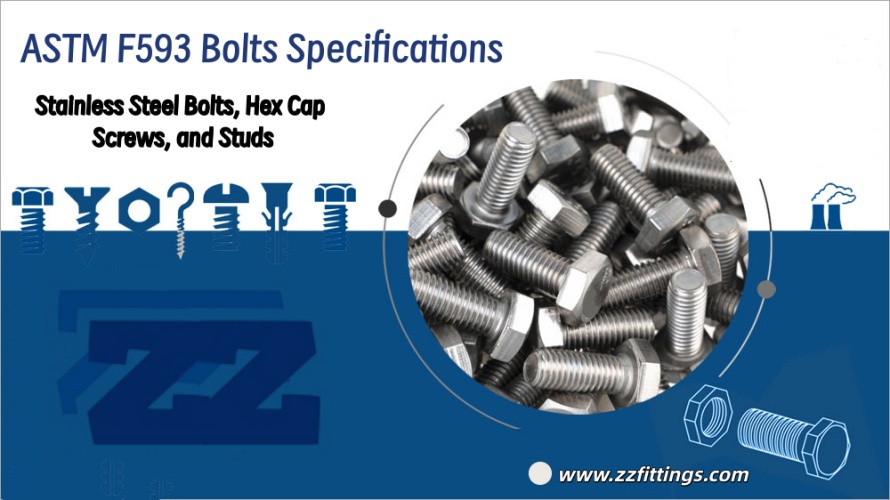
What are ASTM F593 Bolts?
ASTM F593 is the standard specification developed by the American Society for Testing and Materials (ASTM) for stainless steel bolts, studs, and screws, primarily covering austenitic, martensitic, and ferritic stainless steel materials. This standard defines the chemical composition, mechanical properties, heat treatment requirements, and manufacturing processes for different stainless steel alloys to ensure product quality and reliability. It is widely used in engineering applications requiring corrosion resistance, mechanical strength, and reliability, including chemical equipment, marine vessels, food processing, construction, and oil and gas industries.
ZIZI has completed many orders for bolts. If you want to know more about the orders, please click
ASTM F593 Fasteners Specifications
This specification covers the requirements for stainless steel bolts, hex cap screws, and studs 0.25 to 1.50 in., inclusive, in nominal diameter in a number of alloys in common use and intended for service applications requiring general corrosion resistance.
F593 Alloy Groups
Seven groups of stainless steel alloys are covered, including fourteen austenitic, two ferritic, four martensitic, and one precipitation hardening.
| Group | Alloy Grades | Condition | Family Type |
| 1 | 304,305,384,304L,XM1,18-9LW, 302HQD | Cold Worked ( CW ) | Austenitic |
| 2 | 316, 316 L | Cold Worked ( CW ) | Austenitic |
| 3 | 321, 347 | Cold Worked ( CW ) | Austenitic |
| 4 | 430E | Cold Worked ( CW ) | Ferritic |
| 5 | 410F | Hardened & Tempered ( H ) | Martensitic |
| 6 | 431 | Hardened & Tempered ( H ) | Martensitic |
| 7 | 630 | Age Hardened ( AH ) | Precipitation Hardening |
Chemical Composition
| Composition,%,maximum except as shown | ||||||||||||
| UNS Designation | Alloy Group | Alloy | Carbon | Manganese | Phosphorus | Sulfur | Silicon | Chromium | Nickel | Copper | Molybdenum | Others |
| Austenitic Alloys | ||||||||||||
| S30200 | 1 | 303 | 0.15 | 2.00 | 0.200 | 0.150 min | 1 | 17.0- 19.0 | 8.0- 10.0 | 0.60 max^ | ||
| S30323 | 1 | 303 Se | 0.15 | 2.00 | 0.200 | 0.060 | 1 | 17.0- 19.0 | 8.0- 10.0 | Se 0.15min | ||
| A30400 | 1 | 304 | 0.08 | 2.00 | 0.045 | 0.030 | 1 | 18.0- 20.0 | 8.0- 10.5 | 1.00 | ||
| S30403 | 1 | 304L | 0.03 | 2.00 | 0.045 | 0.030 | 1 | 18.0- 20.0 | 8.0- 12.0 | 1.00 | ||
| S30500 | 1 | 305 | 0.12 | 2.00 | 0.045 | 0.030 | 1 | 17.0- 19.0 | 10.5- 13.0 | 1.00 | ||
| S38400 | 1 | 384 | 0.08 | 2.00 | 0.045 | 0.030 | 1 | 15.0- 17.0 | 17.0- 19.0 | 0.50 max⁴ | ||
| S20300 | 1 | XM1 | 0.08 | 5.00-6.50 | 0.040 | 0.18- 0.35 | 1 | 16.0- 18.0 | 5.0-6.5 | 1.75- 2.25 | ||
| S30430 | 1 | 18- 9LW | 0.10 | 2.00 | 0.045 | 0.030 | 1 | 17.0- 19.0 | 8.0- 10.0 | 3.0-4.0 | ||
| S30433 | 1 | 302HQ | 0.03 | 2.00 | 0.045 | 0.030 | 1 | 17.0- 19.0 | 8.0- 10.0 | 3.0-4.0 | ||
| S31600 | 2 | 316 | 0.08 | 2.00 | 0.045 | 0.030 | 1 | 16.0- 18.0 | 10.0- 14.0 | 2.0-3.0 | ||
| S31603 | 2 | 316 L | 0.03 | 2.00 | 0.045 | 0.030 | 1 | 16.0- 18.0 | 10.0- 14.0 | 2.0-3.0 | ||
| S32100 | 3 | 321 | 0.08 | 2.00 | 0.045 | 0.030 | 1 | 17.0- 19.0 | 9.0- 12.0 | Ti 5xCmin | ||
| S34700 | 3 | 347 | 0.08 | 2.00 | 0.045 | 0.030 | 1 | 17.0- 19.0 | 9.0- 13.0 | Cb+Ta 10x C min | ||
| Ferritic Alloys | ||||||||||||
| S43000 | 4 | 430 | 0.12 | 1.00 | 0.040 | 0.030 | 1 | 16.0- 18.0 | ||||
| S43020 | 4 | 430F | 0.12 | 1.25 | 0.060 | 0.150 min | 1 | 16.0- 18.0 | 0.60 max | |||
| Martensitic Alloys | ||||||||||||
| S41000 | 5 | 410 | 0.15 | 1.00 | 0.040 | 0.030 | 1 | 11.5- 13.5 | ||||
| S41600 | 5 | 416 | 0.15 | 1.25 | 0.060 | 0.150 min | 1 | 12.0- 14.0 | 0.60 max⁴ | |||
| S41623 | 5 | 416 Se | 0.15 | 1.25 | 0.060 | 0.060 | 1 | 12.0- 14.0 | Se 0.15min | |||
| S43100 | 6 | 431 | 0.20 | 1.00 | 0.040 | 0.030 | 1 | 15.0- 17.0 | 1.25- 2.50 | |||
| Precipitation Hardening Alloy | ||||||||||||
| S17400 | 7 | 630 | 0.07 | 1.00 | 0.040 | 0.030 | 1 | 15.0- 17.5 | 3.0-5.0 | Cb+Ta 0.15 -0.45 | ||
Mechanical Properties
| Stainless Steel Alloys | ConditionB | Alloy Mechanical Property Marking | Nominimumal Diameter, inch | Full Size Tests | Machined Specimen Tests | ||||
| Tensile Strength, ksiC | Yield Strength, ksiDC | Rockwell Hardness | Tensile Strength, ksiC | Yield Strength, ksiDC | Elongation in 4D, % | ||||
| Austenitic Alloys | |||||||||
| 1 (303, 304, 304L, 305, 384, XM1, 18-9LW, 302HQ, 303Se) | AF | F593A | 1/4 to 1-1/2, incl. | 65 – 85 | 20 | B85 maximum | 60 | 20 | 40 |
| A | F593B | 1/4 to 1-1/2, incl. | 75 – 100 | 30 | B65 to 95 | 70 | 30 | 30 | |
| CW1 | F593C | 1/4 to 5/8, incl. | 100 – 150 | 65 | B95 to C322 | 95 | 60 | 20 | |
| CW2 | F593D | 3/4 to 1-1/2, incl. | 85 – 140 | 45 | B80 to C32 | 80 | 40 | 25 | |
| SH1 | F593A | 1/4 to 5/8, incl. | 120 – 160 | 95 | C24 to C36 | 115 | 90 | 12 | |
| SH2 | F593B | 3/4 to 1, incl. | 110 – 150 | 75 | C20 to C32 | 105 | 70 | 15 | |
| SH3 | F593C | 1-1/8 to 1-1/4, incl. | 100 – 140 | 60 | B95 to C30 | 95 | 55 | 20 | |
| SH4 | F593D | 1-3/8 to 1-1/2, incl. | 95 – 130 | 45 | B90 to C28 | 90 | 40 | 28 | |
| 2 (316, 316L) | AF | F593E | 1/4 to 1-1/2″, incl. | 65 – 85 | 20 | B85 maximum | 60 | 20 | 40 |
| A | F593F | 1/4 to 1-1/2″, incl. | 75 – 100 | 30 | B65 to 95 | 70 | 30 | 30 | |
| CW1 | F593G | 1/4 to 5/8, incl. | 100 – 150 | 65 | B95 to C322 | 95 | 60 | 20 | |
| CW2 | F593H | 3/4 to 1-1/2, incl. | 85 – 140 | 45 | B80 to C32 | 80 | 40 | 25 | |
| SH1 | F593E | 1/4 to 5/8, incl. | 120 – 160 | 95 | C24 to C36 | 115 | 90 | 12 | |
| SH2 | F593F | 3/4 to 1, incl. | 110 – 150 | 75 | C20 to C32 | 105 | 70 | 15 | |
| SH3 | F593G | 1-1/8 to 1-1/4, incl. | 100 – 140 | 60 | B95 to C30 | 95 | 55 | 20 | |
| SH4 | F593H | 1-3/8 to 1-1/2, incl. | 95 – 130 | 45 | B90 to C28 | 90 | 40 | 28 | |
| 3 (321, 347) | AF | F593J | 1/4 to 1-1/2, incl. | 65 – 85 | 20 | B85 max | 60 | 20 | 40 |
| A | F593K | 1/4 to 1-1/2, incl. | 75 – 100 | 30 | B65 to 95 | 70 | 30 | 30 | |
| CW1 | F593L | 1/4 to 5/8, incl. | 100 – 150 | 65 | B95 to C322 | 95 | 60 | 20 | |
| CW2 | F593M | 3/4 to 1-1/2, incl. | 85 – 140 | 45 | B80 to C32 | 80 | 40 | 25 | |
| SH1 | F593J | 1/4 to 5/8, incl. | 120 – 160 | 95 | C24 to C36 | 115 | 90 | 12 | |
| SH2 | F593K | 3/4 to 1, incl. | 110 – 150 | 75 | C20 to C32 | 105 | 70 | 15 | |
| SH3 | F593L | 1-1/8 to 1-1/4, incl. | 100 – 140 | 60 | B95 to C30 | 95 | 55 | 20 | |
| SH4 | F593M | 1-3/8 to 1-1/2, incl. | 95 – 130 | 45 | B90 to C28 | 90 | 40 | 28 | |
| Ferritic Alloys | |||||||||
| 4 (430, 430F) | AF | F593X | 1/4 to 1-1/2, incl. | 55 – 75 | 30 | B85 maximum | 50 | 25 | — |
| A | F593N | 1/4 to 1-1/2, incl. | 55 – 75 | 30 | B85 maximum | 50 | 25 | — | |
| CW1 | F593V | 1/4 to 5/8, incl. | 60 – 105 | 40 | B75 to 98 | 55 | 35 | — | |
| CW2 | F593W | 3/4 to 1-1/2, incl. | 55 – 100 | 30 | B65 to 95 | 50 | 25 | — | |
| Martensitic Alloys | |||||||||
| 5 (410, 416, 416Se) | H | F593P | 1/4 to 1-1/2, incl. | 110 – 140 | 90 | C20 to 30 | 110 | 90 | 18 |
| H | F593P | 1/4 to 1-1/2, incl. | 110 – 140 | 90 | C20 to 30 | 110 | 90 | 18 | |
| HT | F593R | 1/4 to 1-1/2, incl. | 160 – 190 | 120 | C34 to 45 | 160 | 120 | 12 | |
| 6 (431) | H | F593S | 1/4 to 1-1/2, incl. | 125 – 150 | 100 | C25 to 32 | 125 | 100 | 15 |
| HT | F593T | 1/4 to 1-1/2, incl. | 180 – 220 | 140 | C40 to 48 | 180 | 140 | 10 | |
| Precipitation Hardening Alloy | |||||||||
| 7 (630) | AH | F593U | 1/4 to 1-1/2, incl. | 135 – 170 | 105 | C28 to 38 | |||
Tensile Stress Areas and Threads per Inch
| Nominimumal Size, inch. | Coarse Threads – UNC | Fine Threads – UNF | Thread Series – 8UN | |||
| Threads / inch | Stress AreaA, in2 | Threads / inch | Stress AreaA, in2 | Threads / inch | Stress AreaA, in2 | |
| 1/4 | 20 | 0.0318 | 28 | 0.0364 | — | — |
| 5/16 | 18 | 0.0524 | 24 | 0.058 | — | — |
| 3/18 | 16 | 0.0775 | 24 | 0.0878 | — | — |
| 7/16 | 14 | 0.1063 | 20 | 0.1187 | ||
| 1/2 | 13 | 0.1419 | 20 | 0.1599 | ||
| 9/16 | 12 | 0.182 | 18 | 0.203 | ||
| 5/8 | 11 | 0.226 | 18 | 0.256 | ||
| 3/4 | 10 | 0.334 | 16 | 0.373 | ||
| 7/8 | 9 | 0.462 | 14 | 0.509 | ||
| 1 | 8 | 0.606 | 12 | 0.663 | ||
| 1 1/8 | 7 | 0.763 | 12 | 0.856 | 8 | 0.79 |
| 1 1/4 | 7 | 0.969 | 12 | 1.073 | 8 | 1 |
| 1 3/8 | 6 | 1.155 | 12 | 1.315 | 8 | 1.233 |
| 1 1/2 | 6 | 1.405 | 12 | 1.581 | 8 | 1.492 |
Referenced Documents
ASTM A193 / A193M – 16 : Specifications for High-Temperature Bolting, with Expansion Coefficients Comparable to Austenitic Stainless Steels
ASTM A1082 / A1082M – 16 : Specifications for High Strength Precipitation Hardening and Duplex Stainless Steel Bolting for Special Purpose Applications
ASTM F2281 : Specifications for Stainless Steel and Nickel Alloy Bolts, Hex Cap Screws, and Studs, for Heat Resistance and High Temperature Applications Designation
ASTM A1014 / A1014M – 16 : Specifications for Precipitation-Hardening Bolting (UNS N07718) for High Temperature Service
ASTM A962 / A962M – 16a : Specifications for Common Requirements for Bolting Intended for Use at Any Temperature from Cryogenic to the Creep Range
ASTM A638 / A638M : Specifications for Precipitation Hardening Iron Base Superalloy Bars, Forgings, and Forging Stock for High-Temperature Service
ASTM F593 VS ASTM A193
| Feature | ASTM F593 | ASTM A193 |
| Material | Austenitic, martensitic, or ferritic stainless steel | Alloy steel and stainless steel |
| Application | Mainly used in general corrosion-resistant environments, such as chemical equipment, marine facilities, food processing, etc. | Mainly used in high temperature, high pressure, and corrosive service, such as boilers, pressure vessels, valves, and flanges |
| Mechanical Properties | Focus on corrosion resistance and moderate strength, tensile strength typically between 515–860 MPa (depending on condition) | High tensile strength and creep resistance, tensile strength typically between 585–1000+ MPa |
| Standards and Grades | Covers multiple stainless steel grades, such as 304, 304L, 316, 316L, 321, 410, etc. | Covers alloy steel and stainless steel grades, such as B7, B8, B8M, B16, etc. |
| Heat Treatment | Some grades may not require heat treatment | Most alloy steel grades (e.g., B7) require quenching and tempering |
| Typical Industries | Chemical, marine, food, pharmaceutical, general structural use | Petrochemical, power generation, oil & gas, high temperature and high pressure piping systems |
Why Choose ASTM F593 Bolts?
Marine Engineering and Shipbuilding: In seawater, saltwater corrosion poses a significant challenge to ordinary bolts. F593 F/G grades, with their excellent resistance to chloride corrosion, are ideal fasteners for ships, docks, and offshore platforms.
Chemical and Pharmaceutical Industries: Many chemicals are highly corrosive. F593 bolts are used to connect pipes, valves, and reactors, ensuring the integrity and safety of equipment.
Construction and Civil Engineering: In outdoor structures like bridges and tunnels, bolts must withstand rain, moisture, and contaminants for extended periods. Stainless steel bolts effectively prevent rust and corrosion.
Food Processing and Medical Equipment: These industries place extremely high demands on hygiene. Stainless steel’s smooth, easy-to-clean surface and resistance to bacterial growth make ASTM F593 bolts indispensable.